
Could Companion Care From CareHaus in Norfolk County Be the Mental Health Support Seniors Need?
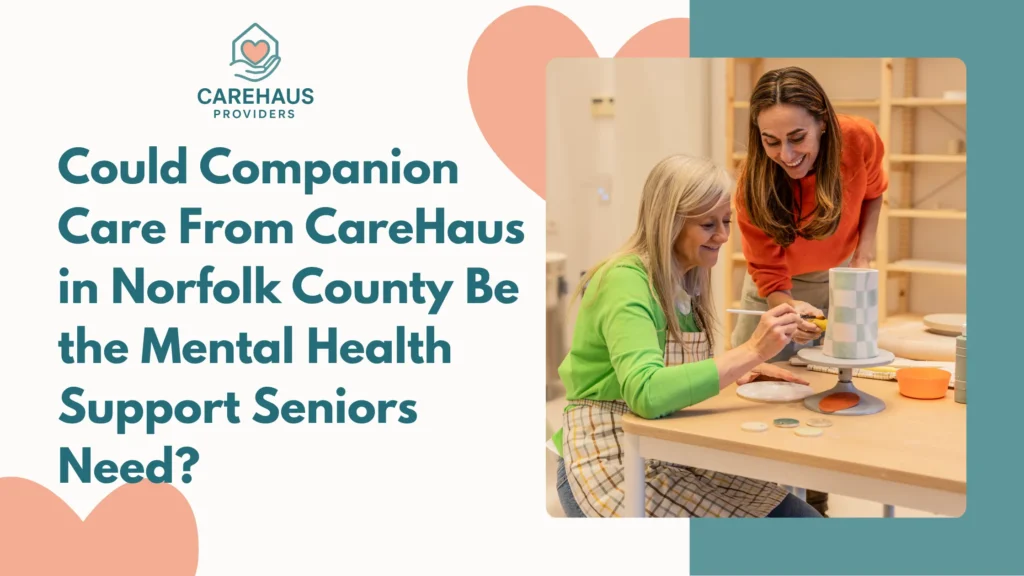
Families rarely notice emotional changes in seniors all at once. Shifts often begin quietly through reduced interaction, limited routine, or increased time alone. Companion care in Norfolk County offers structured, non-medical support that focuses on presence, engagement, and daily connection. This guide walks families through how companion care fits into senior mental well-being planning in a practical, local context. When Emotional Changes Begin Signaling the Need for Support Subtle emotional changes often appear before physical concerns. Seniors may withdraw from activities, speak less frequently, or lose interest in routines they once enjoyed. Recognizing these early signs allows families to respond thoughtfully instead of waiting for distress to escalate. Companion care provides consistent engagement within familiar home settings. These early signals naturally lead families to explore what companion care includes. How Companion Care Supports Everyday Emotional Stability Once emotional needs become more noticeable, understanding companion care services helps families make informed decisions. Companion care focuses on social presence rather than physical or medical assistance. The goal is to support emotional balance through regular engagement and predictable routines. These services connect directly to the emotional challenges identified earlier. Why Timing Matters When Considering Companion Care The point at which families introduce companion care often shapes its effectiveness. Early planning allows support to feel natural rather than reactive. Companion care works best when introduced before emotional strain becomes overwhelming. Even with good timing, families may still encounter concerns along the way. Common Concerns Families Have About Companion Care As families move closer to arranging services, questions often arise. These concerns are common and manageable with clear information. Understanding them helps families move forward with confidence. These concerns highlight the importance of a clear, step-by-step approach. A Practical Path to Starting Companion Care Services Step One: Observe Emotional and Social Gaps The process begins by noticing changes in engagement and mood. This clarity shapes all future decisions. Step Two: Align Family Expectations Shared understanding reduces confusion later. Alignment prepares families for service selection. Step Three: Focus on Local Companion Care Providers Local presence supports consistency and responsiveness. Step Four: Translate Needs Into a Support Plan An initial discussion helps structure services. Step Five: Begin Care and Adjust Over Time Companion care evolves alongside emotional needs. Why Families Often Choose Agency-Based Companion Care As plans take shape, families compare care options. Agency-based companion care provides structure and oversight. This reassurance matters when emotional well-being is the focus. What Influences the Cost of Companion Care Services Cost considerations naturally follow planning. Companion care pricing reflects practical variables rather than fixed packages. Service details are available here: Companion Care Support in Norfolk. H2: Preparing Information That Supports Better Companion Care Preparation strengthens service quality from the start. Organized information improves communication and engagement. Misunderstandings That Can Limit Companion Care Benefits Certain assumptions can reduce effectiveness if left unaddressed. Avoiding these missteps supports better outcomes. How Companion Care Is Used Across Norfolk County Local lifestyle and family structure shape how services are used. In Norfolk County, many seniors live independently while families reside elsewhere. Companion care helps bridge that gap through regular presence. These patterns highlight the value of locally informed support. Habits That Support Long-Term Companion Care Success Sustainable companion care depends on communication and consistency. Local Companion Care Support Across Norfolk County CareHaus Providers supports companion care needs throughout Norfolk County. Service coverage spans local towns and communities, ensuring reliable access for families seeking consistent support. You can review the full list of locations served on the CareHaus Providers service areas page.The agency’s local presence can also be viewed on Google Maps for CareHaus Providers. Frequently Asked Questions About Companion Care Can companion care support senior mental well-being?Companion care supports emotional well-being through regular interaction and routine. While it does not provide medical mental health treatment, it helps reduce isolation and support daily balance. How often can companion care visits occur?Visits can be scheduled daily, weekly, or flexibly. Frequency depends on engagement needs and personal routines. Who benefits most from companion care?Seniors living alone or experiencing reduced social interaction often benefit most. Families seeking non-medical emotional support also find companion care helpful. What is the first step to starting companion care?The process begins with a conversation about needs and preferences. Families can explore options through CareHaus Providers’ companion care services. H2: Get Companion Care Support From CareHaus Providers Companion care is about connection, routine, and presence. With the right support plan, seniors can maintain emotional stability while remaining at home. CareHaus Providers provides structured companion care services to families across Norfolk County. 📞 Call (508) 320-4985📧 Email support@carehausagency.com